Parking Lot Lights: LED Conversion vs. Replacement
Should You Convert Existing Parking Lot Lights to LED or Replace the Fixtures?
When metal halide parking lot lights begin to fail, there are generally two options: convert the existing fixtures to LED or replace the fixtures with new LED units.
As a general rule, a few failed lights in an otherwise well-maintained parking lot can be good candidates for LED conversion. When failures are widespread or the existing fixtures are deteriorating, complete fixture replacement often makes more sense.
When Does an LED Conversion Make Sense?
If only a few parking lot lights have failed and the existing fixtures are still in good condition, converting those fixtures to LED can be a practical solution.
One advantage is appearance. Reusing the existing housings keeps the fixtures looking consistent throughout the parking lot instead of mixing a few new fixture styles with the originals.
The converted fixtures also benefit from lower energy consumption and can provide improved light output compared with aging metal halide lamps. Metal halide lamps lose a significant amount of their light output as they age, so an LED conversion can produce a noticeable improvement.
When converting only part of a parking lot, color temperature should also be considered. Selecting an LED that is reasonably consistent with the remaining lighting can help prevent the converted fixtures from looking noticeably different from the rest of the property.
Is the Existing Fixture Worth Keeping?
Before converting a fixture, its overall condition should be considered.
A fixture with a solid housing, intact glass or lens, good seals, and serviceable internal components can be a good candidate for conversion.
A fixture with broken glass, significant corrosion, deteriorated seals, heat-damaged wiring, a damaged socket, or other problems may be better replaced.
Some of these conditions aren't obvious from the ground. A fixture that looks acceptable from below may reveal additional deterioration once it is opened for service. At that point, replacing the fixture may make more sense than installing new LED components into equipment that is already approaching the end of its useful life.
When Does Complete LED Fixture Replacement Make More Sense?
If most of the parking lot lights have failed, or many of the fixtures are showing signs of deterioration, replacing the fixtures with new LED units is generally worth considering.
Instead of placing a new LED lamp into an aging fixture, complete replacement provides a new housing, lens, seals, driver, LEDs, wiring, and other components.
A good-quality purpose-built LED fixture will also typically provide a better long-term service-life solution than installing a replacement lamp into an older fixture.
New LED fixtures can offer another advantage: light distribution. An LED conversion continues to rely to some degree on a fixture and optical system originally designed for a different type of lamp. A purpose-built LED fixture can use optics specifically designed to direct light where it is needed.
That doesn't mean a conversion will provide poor lighting. It simply means that if improved coverage or light distribution is part of the goal, complete fixture replacement may offer additional options.
The Quality of the LED Lamp Matters
Not all LED replacement lamps are the same.
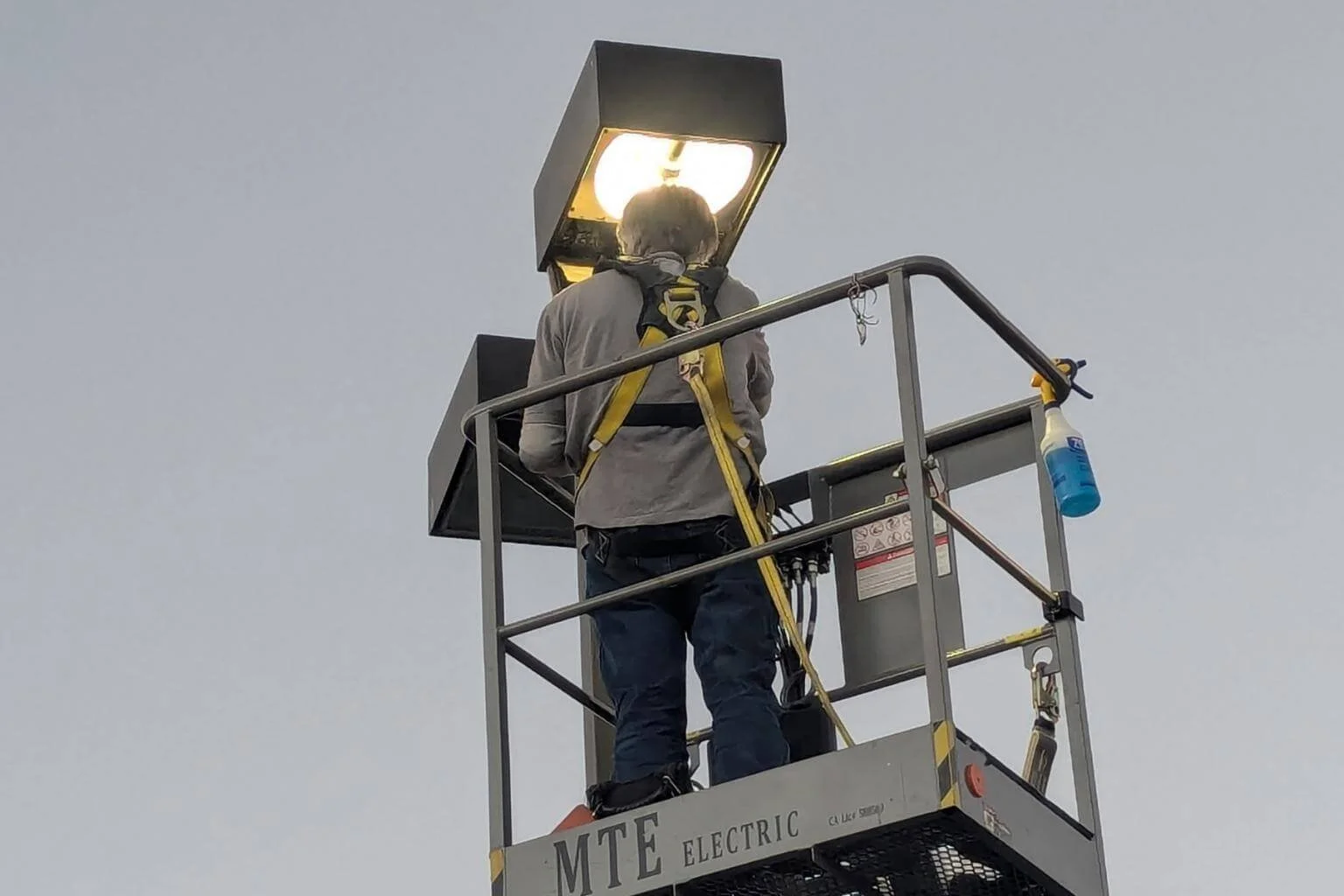
This is especially important with parking lot lighting because changing a lamp may require a bucket truck or other specialized equipment. The cost of a premature lamp failure isn't limited to purchasing another lamp—it also includes getting personnel and equipment back up to the fixture.
We come across parking lot fixtures that have previously been converted using lower-quality LED lamps. When those lamps fail prematurely, what initially appeared to be a less expensive solution can result in additional maintenance costs.
For hard-to-access lighting, choosing a reliable, higher-quality lamp can help reduce the likelihood of having to service the same fixture again sooner than expected.
Is the LED Lamp Rated for the Fixture?
Lamp selection should involve more than matching the base, wattage, and light output.
Many parking lot fixtures are enclosed, and not every LED replacement lamp is rated for use inside an enclosed fixture. Heat generated inside the housing needs to be considered, particularly with outdoor fixtures exposed to high ambient temperatures.
The manufacturer's specifications should be checked to make sure the LED lamp is suitable for the fixture and the environment in which it will operate.
Conversion or Replacement?
There isn't one answer that works for every parking lot.
If a few lights have failed and the existing fixtures are in good condition, converting those fixtures to LED can extend the usefulness of the existing lighting system while reducing energy consumption.
If failures are widespread, fixtures are deteriorating, or improved light distribution and longer-term reliability are priorities, replacing the fixtures with quality purpose-built LED units may be the better approach.
The important part is to evaluate the entire fixture and the condition of the parking lot lighting system, rather than making the decision based solely on which lamps have stopped working.
For an example of an LED conversion using existing parking lot fixtures, see our
